The Local Team Behind Working Vessels
A fishing vessel does not make money while it is waiting alongside.
For vessel owners, skippers, fleet managers and shore-based engineering teams, downtime is never just a technical issue. It affects landing windows, crew planning, production schedules, maintenance budgets and the confidence of everyone depending on that vessel to return to sea.
That is where local support matters.
At PETEC Services, much of our work starts with a practical question from a client: “Can you come have a look?” “Can this be repaired?” “Can we make this work better?” “Can we build something that actually fits this vessel?”
Those questions are at the centre of what PETEC does.
Engineering That Starts With the Vessel
No two working vessels are exactly the same.
A trawler, purse seiner, longliner, aquaculture support vessel or harbour workboat may all use hydraulic equipment, but the operating demands are different. Deck space changes. Crew workflow changes. Hydraulic supply changes. The way the equipment is used in real conditions changes.
That is why marine engineering cannot only happen from a catalogue.
PETEC’s approach is to understand the vessel, the duty, the available space, the existing hydraulic system and the way the crew needs to operate. From there, we can design, manufacture, modify, repair or support the right solution for the job.
Sometimes that means manufacturing new equipment. Sometimes it means rebuilding what is already there. Sometimes it means solving a hydraulic issue that has been causing frustration for months.
The value is not only in the equipment. The value is in understanding what the equipment must do every day.
Supporting Local Fishing Operators
South African fishing operators work in demanding conditions. Saltwater, corrosion, vibration, heavy deck loads and tight operating windows all put pressure on equipment.
When something fails, the impact is immediate.
A leaking hydraulic line, worn motor, unreliable winch, damaged fish pump, steering issue or control fault can quickly slow down an entire operation. In those moments, clients need more than a supplier.
They need a team that understands marine hydraulics, deck machinery and the pressure of getting a vessel ready to sail.
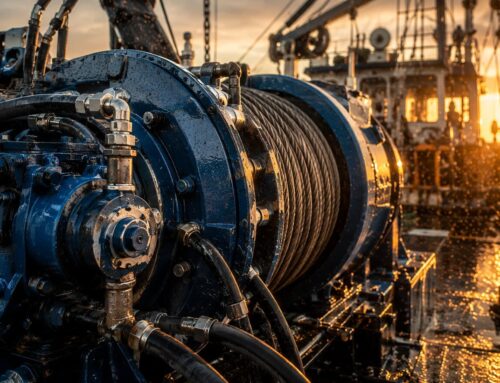
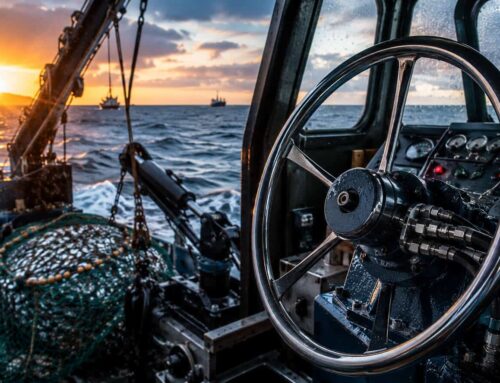
PETEC supports local clients with marine hydraulic troubleshooting and repairs, winches and deck machinery, fish pumps and dewatering screens, net haulers and net stackers, hydraulic power units and control systems, hydraulic motors, pumps, filtration and servicing, design, fabrication, installation, commissioning and aftersales assistance.
The goal is simple: help clients reduce downtime and keep vessels working.
Built, Repaired and Supported Locally
One of PETEC’s strengths is that we are not only a sales office.
Our work connects the office, the design team, the workshop, the technicians and the vessel.
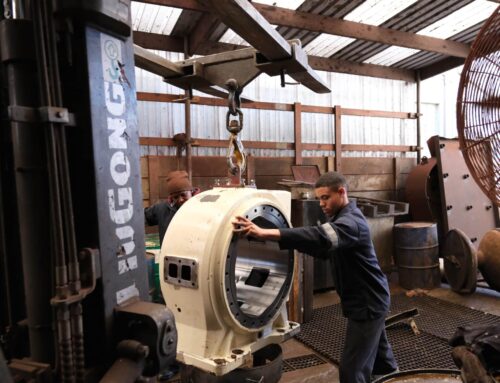
PETEC’s facilities support machining, boiler shop work, hydraulic and mechanical fitting, CAD drawings and 3D modelling. That gives us the ability to move from problem assessment to practical execution with a clear understanding of the full job.
For local clients, this matters.
A vessel owner may need a worn component repaired quickly. A shipyard may need hydraulic input during a refit. A fishing operator may need a fish handling system that fits an existing deck layout. A fleet team may need a more reliable service plan before the next season starts.
Because PETEC works across design, manufacturing, installation, repair and support, we can stay close to the full lifecycle of the equipment.
Fish Handling, Deck Machinery and Hydraulics
The PETEC product range is built around real marine operations.
Fish pumps help move catch efficiently with minimal damage. Dewatering screens separate fish from the incoming fish-water mixture and support controlled fish delivery. Net haulers and net stackers help improve net handling and deck workflow. Winches, power units, control panels and steering systems support the daily work of the vessel.
But every product still needs the right application.
A fish pump must match the duty and layout. A dewatering screen must fit the flow and available deck space. A winch must suit the vessel’s hydraulic supply, load requirements and operating method. A hydraulic power unit must integrate properly with the equipment it supports.
That is where engineering judgement makes the difference.
Still There After Delivery
For PETEC, the job does not end when equipment leaves the workshop.
Marine equipment must be installed, commissioned, operated, maintained and supported. Crews need equipment they can trust. Fleet managers need serviceability. Owners need long-term value.
When something needs attention later, clients need a team that can respond.
That aftersales support is one of the most important parts of the relationship.
Whether it is a planned service, urgent repair, technical inspection, hydraulic test, oil filtration, component repair, pipe bending or system upgrade, PETEC’s role is to remain useful long after the first delivery.
A Partner to Local Clients
PETEC has exported equipment around the world, but the local South African marine industry remains central to who we are.
Cape Town, St Helena Bay and the wider South African fishing sector are not just locations on a website. They are where relationships are built, where equipment is tested in real working conditions, and where clients know they can pick up the phone when they need support.
That is the real value of local marine engineering.
It is not only about building strong equipment. It is about being close enough to understand the problem, experienced enough to solve it and committed enough to stand behind the work.
PETEC Services — Marine Hydraulic Engineers Since 1988.
Giving you more time at sea.