Reliability begins with the way the equipment, hydraulics and controls work together.
On a commercial fishing vessel, a winch is never just a winch.
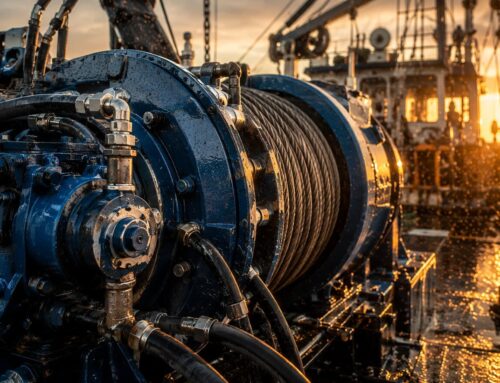
Its performance depends on the hydraulic power available, the pipework and valves feeding it, the gearbox and motor selection, the brake and clutch arrangement, the control system, the drum geometry and the way the unit is installed on the vessel.
The same applies to net haulers, net stackers, fish pumps, anchor winches, capstans, steering systems and thrusters.
When engineers specify these components separately, problems often only become visible during commissioning—or worse, once the vessel returns to sea.
A well-manufactured winch can still run too slowly if the available oil flow is insufficient. A restricted return line can cause a hydraulic motor to overheat. An incorrectly designed control circuit can make a brake feel inconsistent. Designers can also make strong equipment difficult to service when they overlook access, pipe routing and maintenance requirements during installation.
That is why PETEC approaches deck machinery as a complete operating system rather than a collection of individual products.
Start with the vessel’s actual duty
Good engineering begins with understanding the work the equipment must perform.
Before selecting a motor, gearbox or drum size, engineers must understand the operating duty. How much line pull is required on the first layer and on a full drum? What line speed is needed during normal hauling? Will the equipment operate continuously or intermittently? Is controlled freewheeling required? Will the operator work locally at the machine, remotely from the bridge or from both positions?
Engineers must also assess the vessel’s existing hydraulic system. The available pressure and flow must match the equipment’s operating requirements. Oil cooling capacity, filtration, return pressure and pipe sizes all influence how reliably the system performs.
These details are not secondary. They determine whether the equipment performs as intended.
The interfaces matter
Many operational problems occur where different systems meet.
One company may supply the winch, another the hydraulic system, a third party the controls and a local shipyard the installation. Each component may perform correctly on its own, yet the complete system can still be poorly matched.
PETEC develops the mechanical equipment, hydraulic circuits and controls around one operating requirement.
This integrated approach applies across equipment such as:
- Trawl and purse seine winches
- Net haulers and net stackers
- Power blocks and long-line haulers
- Fish pumps and dewatering screens
- Anchor winches and capstans
- Hydraulic power units
- Steering and thruster systems
- Local and remote control panels
The objective is not simply to manufacture equipment. It is to ensure every component works correctly within the vessel’s wider operating system.
Controls and manufacturing for long-term performance
A control system is where the engineering meets the operator.
The crew should never have to compensate for a poorly arranged control panel or an unclear operating sequence. Designers should position joysticks, brake selectors, clutch controls, speed selection, pressure indication and emergency functions logically and label them clearly.
When a vessel requires both local and remote operation, the system must provide a safe and unambiguous changeover between stations. The controls should provide useful feedback, such as line length, hydraulic pressure and operating status, without making the panel unnecessarily complicated.
Well-designed controls reduce operator error, improve response times and make demanding operations easier.
Marine equipment operates in one of the harshest environments possible. Saltwater, vibration, heavy loading and long operating hours all influence the design.
The equipment must be robust while engineers must also make it practical to inspect and maintain. Engineers should provide easy access to bearings, brakes, clutches, hydraulic components and lubrication points. They should route pipework correctly and select components with future servicing and replacement in mind.
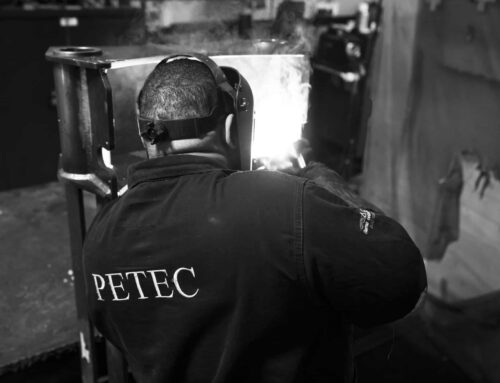
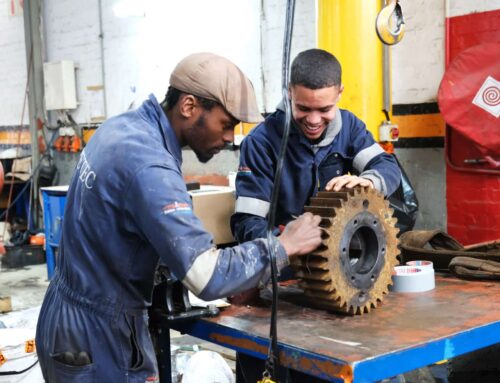
PETEC’s in-house manufacturing and workshop capability allows the design team, manufacturing team and hydraulic technicians to work together throughout every stage of the build.
This collaborative approach helps ensure the final product is not only strong but also serviceable and suited to the vessel’s actual working conditions.
Testing and commissioning
Factory testing plays an important role in reducing commissioning risk.
Where possible, technicians functionally test equipment before delivery. They verify controls, brakes, clutches, hydraulic functions, direction changes and safety systems before the unit reaches the vessel.
This testing helps the client and installation team understand how the equipment operates and allows engineers to resolve issues before installation begins.
Factory testing does not replace commissioning on board the vessel, but it significantly reduces uncertainty during installation and start-up.
Support throughout the equipment lifecycle
The equipment lifecycle does not end when the unit leaves the workshop.
Installation support, commissioning, operator handover, maintenance planning, spare parts and technical backup all influence long-term reliability.
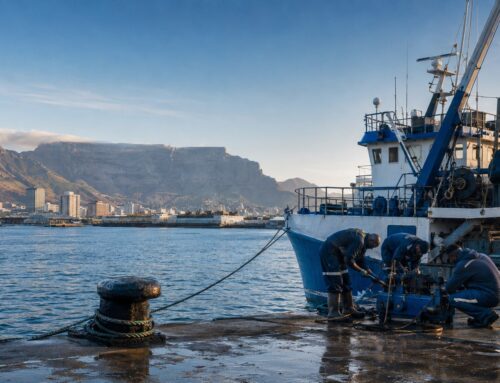
PETEC’s Service Department supports clients with hydraulic fault-finding, repairs, system testing, equipment upgrades, commissioning and breakdown assistance. This continuity links the original design, the manufactured product and the equipment operating in the field.
For vessel owners and fleet managers, that continuity matters. When clients need support, the technical team already understands the equipment’s design, manufacturing process and operating requirements.
One engineering partner, one complete system
Since 1988, PETEC has worked within the commercial fishing and marine engineering sectors, developing equipment for demanding operating environments.
Our approach is straightforward: understand the duty, engineer the complete system, manufacture it properly, test it thoroughly and support it after delivery.
Because dependable deck machinery is not created by one component.
It is created by making every part of the system work together.
Contact PETEC to discuss a new vessel, retrofit, deck machinery upgrade or hydraulic system requirement.